
Main menu Close main menu Main menu Menu ×
News

The Compost Computer Microsite Is Live

Powered by compost, the Compost Computer microsite offers toolkits, research and resources to inspire eco-social technologies

We’re pleased to present the final output of the Compost Computer project: a functioning microsite powered by compost.

Compost Computer is a ground-breaking prototype that transforms bio-energy from compost into electricity. Literally regrounding technology in people and land. Located at MUD in Manchester’s Platt Fields Market Garden, the server running the Compost Computer microsite is powered by the composting practice of their community gardeners. It demonstrates how re-imagining local internet systems with an eco-social focus can significantly reduce emissions and materials, while providing localised power infrastructure.
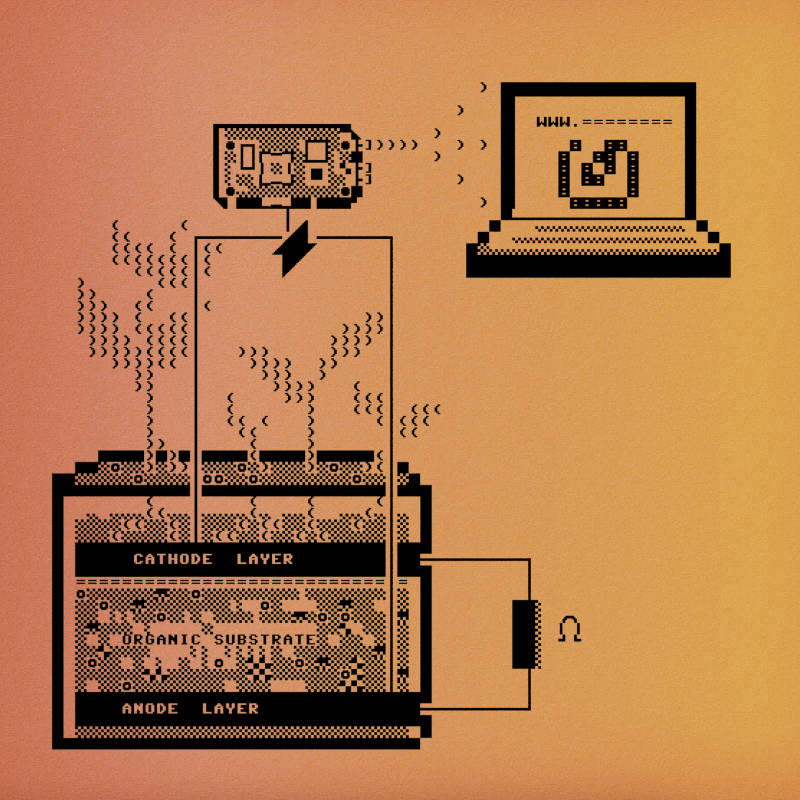
The project has been created in collaboration with FutureEverything and University of the Arts London’ s Critical Climate Computing research group, and realised with Sow The City and MUD Manchester, and is the first project in FutureEverything’s prototyping strand. Through this strand we aim to pathfind new technologies that challenge the dominant rhetoric of computing – from AI to the internet – as infinite and immaterial, revealing their real-world entanglements with ecological crisis, extractive systems, and social inequality. 

Compost Computer is designed to catalyse and support others to develop their own ecological approaches to web and energy infrastructure. As part of this, CCC co-founders Wesley Goatley and Eva Verhoeven have created two open-source toolkits which are available on the Microsite, with code, methodologies, and detailed guidance for anyone wishing to replicate or build upon their bioserver and low-carbon website models and approaches.

The first toolkit offers a step by step guide to building a Microbial Fuel Cell (MFC)-powered webserver, a low-cost, low-power solution for hosting websites using compost as a renewable power source. The kit has everything you need to get started: materials lists, process instructions, troubleshooting tips, and a glossary with recommended readings for further exploration. The second kit contains principles and practices for designing and maintaining a low-carbon website, including hosting options, code language and techniques to reduce data, file sizes and general carbon impact.

We hope this project inspires and equips others to rethink how technologies and systems are built and powered – grounding them in local ecologies and sustainable practices. 

Follow the link HERE to access the Compost Computer website and access the toolkits.


Related articles

Funded by UKRI, the ‘Compost Computer’ is a collaborative project between UAL’s Critical Climate Computing Initiative (CCCI) and arts, technology and cultural organisation FutureEverything, with support from community partners Sow the City and MUD.